Before you go
What should you know before moving to Mexico?
The move is unfamiliar, not dangerous. The paperwork runs on a system, the money runs on a plan, and the day-to-day life runs far more smoothly than most people expect. Start with these four knowns and the rest of this guide fills in the detail.
Start at the consulate, not the beach
Residency paperwork begins before you enter Mexico. Starting stateside is the single smoothest decision you can make.
Most VA benefits travel with you
Disability compensation keeps paying, and the Foreign Medical Program covers service-connected care abroad.
Rent first, buy later
The guide's number one rule: rent in your target area for about six months before you commit to a purchase there.
You are not moving alone
Puerto Vallarta and Riviera Nayarit are home to large U.S. and Canadian communities, and veteran groups are active all over Mexico.
Residency
Temporary vs permanent residency: which one fits?
Mexico's system is a ladder, and most people climb one rung at a time. The two rungs that matter for a move are temporary residency and permanent residency. Neither is citizenship, and both give you a legal footing for living, banking, healthcare and buying.
Temporary residency
Residente Temporal
Built for stays beyond 180 days, for retirement, work, study or family. The first card is issued for one year, then renewed, for up to four years total.
- Valid up to four years, renewed in increments
- Financial requirements are set in UMA units and shift with the exchange rate
- Does not automatically convert to permanent status
Permanent residency
Residente Permanente
Valid indefinitely, with the right to live and work in Mexico without renewals. After four years of temporary residency you can convert, or two years if you are married to a Mexican national.
- Valid indefinitely, no renewals required
- Higher income or savings thresholds than temporary residency
- Step toward citizenship after five years of legal residence
The practical reality of qualifying
As a guide to scale, temporary residency currently asks for roughly $4,300 to $4,500 a month of income or about $73,000 in savings, while permanent residency asks for roughly double the income or about $300,000 in savings. Those figures are set in UMA units, change with exchange rates and can vary by consulate, so treat them as a map, not a quote. Start at the Mexican consulate before you enter, and verify the current numbers for your situation. Miguel connects you with trusted residency specialists rather than filing the paperwork himself.
Veterans Administration benefits
Do Veterans Administration benefits follow you to Mexico?
The short answer: most of your money follows you, and less of your medical care does. The Veterans Administration pays most benefits wherever you live, but VA healthcare abroad works differently than it does stateside. Knowing which is which saves the surprises.
Disability compensation continues
Your VA disability compensation keeps flowing wherever you live, paid through the U.S. financial system as long as your direct deposit and paperwork stay current. Set the logistics up while you are still stateside.
Foreign Medical Program
For service-connected conditions, FMP lets you use any licensed provider in Mexico and the Veterans Administration pays or reimburses the care. You do not need to be enrolled in VA healthcare to use it, and the receipt-filing habit genuinely matters.
TRICARE, for eligible retirees
Retired veterans may hold TRICARE Select Overseas, which can fill a real gap in the coverage picture. Eligibility depends on your specific status, so treat it as an option to verify, not an assumption to rely on.
Federal Benefits Unit
Anchored at the U.S. Embassy, the Federal Benefits Unit helps U.S. veterans and retirees with benefit questions while they live abroad. When you cannot walk into a stateside office, this is where you start.
One big limit: VA home loans
VA home loans cannot be used to buy property in Mexico. The financing that works instead is cross-border lending, and it is covered in the buying section below.
Miguel is not a benefits advisor. He is a veteran who has navigated these questions himself and researched them for his clients. The authority on your specific benefits is the Veterans Administration, and this is the map that tells you what to ask.
Healthcare
What healthcare options are there for veterans in Mexico?
Healthcare is the question veterans ask most, after benefits. The honest answer is a four-layer stack: private hospitals, Mexican private insurance, the IMSS public system and the Veterans Administration's Foreign Medical Program. Most veterans combine more than one layer.
Private hospitals at cash prices
Most coastal cities, including Puerto Vallarta, have modern private hospitals with English-speaking, U.S.- and Canadian-trained doctors, at cash prices far below typical U.S. out-of-pocket care. This is the layer most expats use first.
Mexican private insurance
Mexican private health insurance covers the private system at a fraction of comparable U.S. premiums. For many expats it is the everyday card that makes private care predictable instead of a per-visit gamble.
IMSS, the public system
Legal residents can access IMSS, Mexico's public healthcare system, as a backstop behind the private layers. It is another option in the stack, not the whole answer.
The Foreign Medical Program
Veterans keep FMP for service-connected conditions, with the Veterans Administration paying or reimbursing licensed Mexican providers. It covers a specific slice of care, which is exactly why it belongs in a stack rather than standing alone.
Two cautions from the guide: a U.S. prescription is not universally honored in Mexico, so arrange ongoing medications with a Mexican physician once you settle. And stem cell clinics in Mexico are lightly regulated, so verify credentials before any procedure and treat clinics that overpromise with caution.
Cost of living
What does living in Mexico really cost?
For most Americans, day-to-day living in most of Mexico runs roughly 40 to 55 percent lower than equivalent U.S. spending, depending on where you land and how you live. Housing, food, utilities, healthcare and services all tend to cost less, which is why retirement and disability income stretches so much further on the coast.
That range is a starting point, not a promise. What your money buys in Merida looks different from what it buys on the coast, and your own number depends on your lifestyle, debts and travel habits. Honest budgeting means mapping the range onto your life with current local prices verified before you move.
And the room in the budget is rarely the point on its own. For many veterans it buys a nicer home, more frequent travel, help around the house, or simply the peace of money not being the loudest worry of the month. That is the difference between getting by and living well.
Read the full cost-of-living breakdownThe six-month rule, linked to cost
The single best cost-control decision in the whole move is also the least glamorous: rent in your target area for about six months before you buy. You learn the neighborhood, the seasons and the flood patterns with your eyes before your money is at stake, and you avoid paying closing costs twice if the area is wrong for you.
Buying along the coast also costs more than the listing price: foreign buyers purchase through a bank trust, and closing costs typically run about 5 to 8 percent of the price on top of the purchase itself.
Why rent first, every timeBuying property
Can a veteran buy property in Mexico?
Yes. Americans and Canadians buy property in Mexico every day, and the process is well-established, transparent and protected once you know the structure. The differences are structural, not risky.
The bank trust: fideicomiso
Along the coast and in border zones, which includes all of Puerto Vallarta and Riviera Nayarit, foreign buyers purchase through a bank trust called a fideicomiso. The bank holds title as trustee and you hold the rights of ownership: full control, the right to rent, sell and pass the property to heirs. Your closing team sets it up; it is standard practice.
Financing that crosses the border
VA home loans cannot buy property in Mexico. Instead, a small group of cross-border lenders, including MoXi, HIR Casa and Texana Bank, finance Mexican purchases for U.S.- and Canadian-based buyers using U.S. income and credit as part of the picture.
Qualify before you look
The order that saves months of heartache: get qualified first, then fall in love. A pre-approval tells you the honest number you can bid with and tells sellers you deserve to be taken seriously. Shopping without it is how people find the perfect condo and then discover the financing that does not stretch.
A team on both sides
Mexico's purchase process runs on licensed professionals: a licensed agent, a notary, a bank and a closing team. Miguel works the American side and his eXp-affiliated Mexican team, EndEx Home Group, handles the in-country work, so nothing drops at the border.
Regions
Which regions in Mexico are best for veterans?
Puerto Vallarta / Riviera Nayarit
Home turfEstablished expat corridor, reliable airport, modern hospitals, and a guide who lives here.
Lake Chapala / Ajijic
The largest American expat community in Mexico, with a mild, spring-like climate.
Merida / Yucatan
Consistently ranked among the safest major Mexican cities, with deep culture and Gulf beaches nearby.
San Miguel de Allende
Arts, architecture and a creative international community in the cool highlands.
Cancun / Riviera Maya
Caribbean beaches and a resort-minded market with strong short-stay rental appeal.
Baja California Sur
Desert-meets-sea drama from Los Cabos up the peninsula, warm and dry.
Puerto Vallarta / Riviera Nayarit
Our home turf, and the coast veterans choose most
Mexico's Pacific coast at its most established: a long-settled expat corridor with a reliable international airport flying nonstop to dozens of U.S. cities, modern English-friendly hospitals, and the whole Banderas Bay coastline to choose from, from the walkable city to quiet surf villages to gated resort communities. It is also where Miguel lives and works, which means a guide with boots on the ground in your target area.
Explore the coast, community by community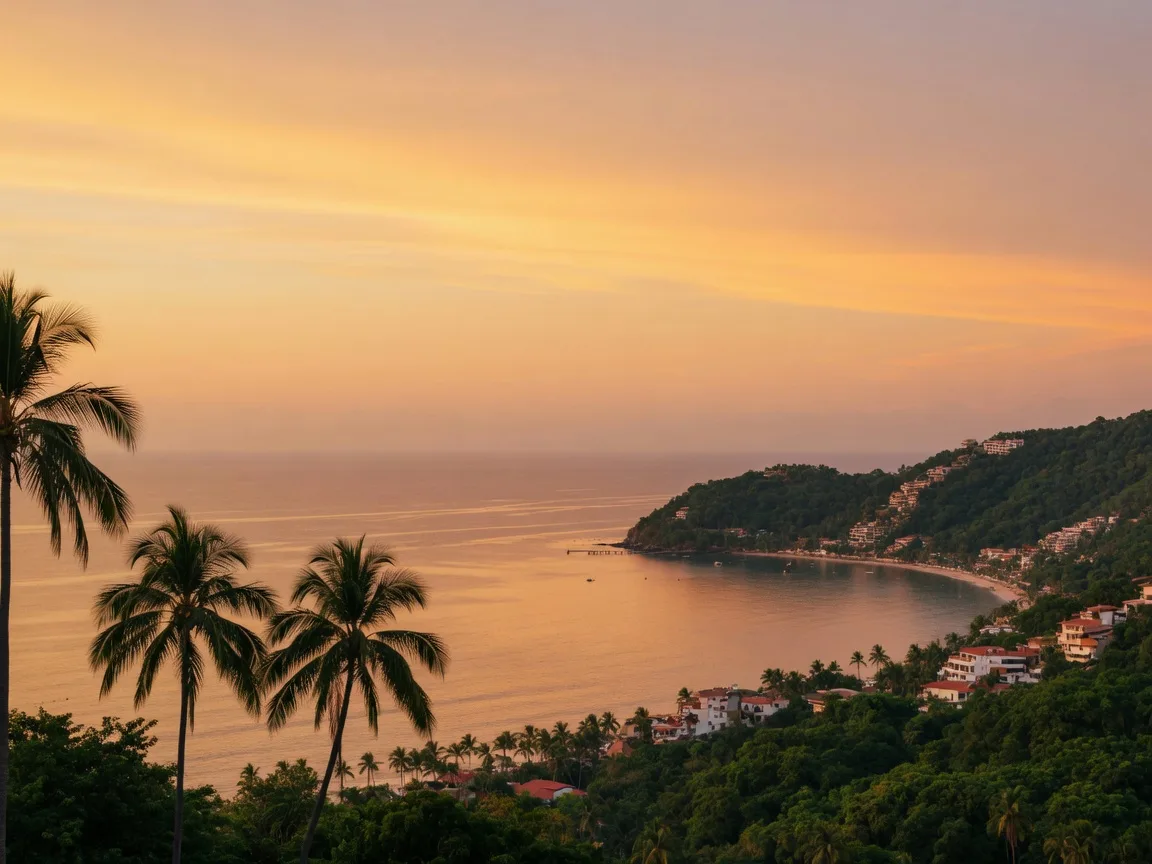
The move
Your step-by-step move checklist
This is the order Miguel walked himself through and walks clients through: paperwork first, healthcare early, banking before you need it, and patience in your first months.
Talk to a guide before you book
A free, no-obligation call sorts your goals, timeline and budget before anything else moves.
Verify residency requirements
Requirements are set in UMA units and change, so confirm the current income or savings thresholds with the Mexican consulate.
Start your residency application
Begin at the consulate before you enter Mexico. Temporary residency runs up to four years; permanent residency is indefinite.
Keep your U.S. accounts open
Your stateside account is the anchor for pensions, VA deposits and bills. Set up direct deposit before you leave.
Review your Veterans Administration benefits
Confirm disability compensation logistics, Foreign Medical Program eligibility, TRICARE status and Federal Benefits Unit contacts.
Line up healthcare before you need it
Build your stack: private insurance, IMSS eligibility for legal residents, and a local doctor identified before you unpack.
Set a budget from current prices
Use the 40 to 55 percent savings range as a starting point, then verify prices for your own area and lifestyle.
Plan the rent-first window
Rent in your target area for about six months before buying. It is the number one rule in the guide for a reason.
Handle legal paperwork stateside
Set up a power of attorney and sort any documents that are easier to sign in the U.S. before you go.
Learn vehicle import rules
If you drive across the border, get the import and permit rules straight before you cross, not at the checkpoint.
Ship little, buy after you land
Bring the irreplaceable and the sentimental; buy furniture and appliances in Mexico, where they fit the homes.
Build community on purpose
Join an American Legion or VFW post early, meet neighbors, and treat the first months as a deliberate settling-in period.
When the rent-first window is over and you are ready to buy, the next sequence is short: get qualified with a cross-border lender, tour with intention, then close through the fideicomiso with your closing team. By then, the paperwork, healthcare and banking layers are already in place, which is exactly why the order above matters.
FAQ
Frequently asked questions about veterans moving to Mexico
Straight answers to the questions veterans actually type into a search box. Your specific situation deserves a specific answer, so treat these as the starting point and ask Miguel the rest.
Can I move to Mexico as a veteran?
Yes. U.S. veterans move to Mexico every year, and veteran status does not block the move. The practical path is the same one any American follows: start your residency paperwork at a Mexican consulate, keep your finances straight, and rent in your target area before you commit to buying. Miguel, a retired disabled veteran, made the same move and guides veterans through it regularly.
Do Veterans Administration benefits follow me to Mexico?
Most do. Your VA disability compensation keeps paying wherever you live, typically by direct deposit into your U.S. bank account. VA healthcare is more limited abroad: the Foreign Medical Program covers service-connected conditions, with the Veterans Administration paying or reimbursing licensed providers in Mexico, and eligible retirees may hold TRICARE Select Overseas. VA home loans, however, cannot be used to buy property in Mexico.
How do I get residency in Mexico?
Start at a Mexican consulate before you enter the country. You can apply for temporary residency, valid for up to four years (the first card is issued for one year, then renewed), or permanent residency, which is valid indefinitely. Financial requirements are set in UMA units and shift with exchange rates and by consulate, so verify the current numbers before you apply. After four years of temporary residency (two if married to a Mexican national), you can convert to permanent residency.
Is Mexico safe for veterans?
Mexico is a large country, and safety varies by city and neighborhood, the same way it does in the United States. Long-established expat communities like Puerto Vallarta, Riviera Nayarit and Lake Chapala are home to large numbers of American retirees, and cities like Merida consistently rank among the safest in Mexico. Choose your area with care, learn the neighborhood before you commit, and take normal street-savvy precautions.
Can a veteran buy property in Mexico?
Yes. Foreigners buy property in Mexico every day. Along the coast and in border zones, including Puerto Vallarta and Riviera Nayarit, buyers purchase through a bank trust called a fideicomiso, which gives them full ownership rights. VA home loans cannot be used in Mexico, but cross-border lenders like MoXi, HIR Casa and Texana Bank finance qualifying purchases, and closing costs typically run about 5 to 8 percent of the price.
How much does it cost to live in Mexico?
For most Americans, day-to-day living in most of Mexico runs roughly 40 to 55 percent lower than equivalent U.S. spending, according to the relocation guide, depending on region and lifestyle. Housing, food, utilities, healthcare and services all tend to cost less. Your own number depends on where you land and how you live, so budget against current local prices rather than averages.
Can I use a VA home loan to buy property in Mexico?
No. VA home loans are limited to properties in the United States and certain U.S. territories, so they cannot finance a home in Mexico. Veterans who want financing use cross-border lenders such as MoXi, HIR Casa and Texana Bank, and Miguel helps connect buyers with the lender that fits their profile.
Talk to the guide, not a call center
Start your move with a straight answer.
Miguel is a retired disabled veteran, dual citizen, bilingual, TREC-licensed in Texas and AMPI-certified on the coast. Send a note and get an honest read on residency, benefits, budget and the right region for your move, typically within one business day.

- US line
- (903) 215-0203
- Mexico line
- +52 477 440 0108
- miguel@operationvfr.com
Tell Miguel where you want to land
Share a few details and get a straight, no-obligation read on your move, from a veteran who made it himself.